Agentic Business Engineering
Once Software Can Fit the Work,
Almost Every Workflow
Becomes a Use Case.
Coding agents change the economics of custom software. The strategic question is no longer where to find AI use cases, but how to build the capacity to deliver them.
At the “KI. Und jetzt?” event in Linz, one question kept returning: where are the valuable AI use cases?
It sounds sensible, but it carries an assumption from an older software economy. It assumes that use cases are rare because software is expensive, slow to change, and built for the average customer. Once the economics change, the question changes with them.
This is the opportunity at the heart of Agentic Business Engineering: software can increasingly be shaped around the work instead of forcing the work to fit the software.
The old bargain
Work used to fit the software.
For decades, companies bought standard systems and adapted their operations to them. The gaps were filled with spreadsheets, copy and paste, email, and manual workarounds. Software quietly determined how the organization operated.
That bargain made economic sense when building and maintaining software required large fixed investments. One system had to serve many customers. Standardization paid for the product, while every customer absorbed some compromise.
Coding agents weaken that constraint. They reduce the cost of understanding a specific process, building a system around it, testing it, and changing it as the work evolves. As Joanna Bakas argues in Software Is Now Disposable, the value of an application increasingly comes from fit, not permanence.
The economic inversion
Efficiency AI accelerates the system. Opportunity AI changes it.
Most AI programs begin with efficiency: write the same report faster, answer the same request sooner, or automate a step inside the existing workflow. That can be valuable. It also leaves the surrounding system untouched.
Opportunity AI asks a more consequential question: if intelligence and software creation become dramatically more accessible, what would we design differently from the start? The answer may be a new customer experience, a continuously adapting internal application, or an agentic workflow that coordinates work across several roles.
The unit of change is no longer the task. It is the operating system around the outcome.
This is why moving from generic copilots to systems built around the business matters. We explored that distinction in Stop Renting AI. Start Owning It.
The new bottleneck
Use cases are abundant. Application Capacity is scarce.
Once software can fit the work, almost every repeated workflow becomes a candidate for redesign. The limiting factor is no longer access to intelligence or even the availability of ideas. It is Application Capacity: the ability to turn available technology into operating change.
That capacity includes people who can frame the right problem, infrastructure that makes experimentation safe, clear ownership, access to data and systems, evaluation, and the judgment to decide what should be deployed. Without those conditions, better models simply widen the gap between what is possible and what the organization can absorb.
01 · Exposure
Exposure creates imagination.
People need to experience what is now possible before they can see different systems in their own work.
02 · Building
Building creates conviction.
A working prototype changes the conversation from abstract potential to concrete choices and tradeoffs.
03 · Deployment
Deployment creates judgment.
Only real use reveals where trust, ownership, governance, and value need to be designed more carefully.
A different way of working
Deliver sooner. Learn earlier. Run more experiments in parallel.
Agentic engineering does more than shorten a task. It changes the shape of the project portfolio. Instead of spending months specifying one large system before anyone can use it, teams can make a smaller version useful earlier, observe real behavior, and improve it in short loops.
That creates more learning per unit of time and makes it possible to explore several bounded opportunities without committing the organization to several transformation programs.
A useful starting point is not another use-case inventory. Pick one consequential workflow and build something people can judge in real work. That is the logic behind our Maker Monday: one workflow, one working prototype, and evidence for the next decision.
The question to take back to work
What will you build next week?
Not which AI tool will you buy. Not which list of use cases will you compile. Which workflow will you turn into a working system that your organization can learn from?
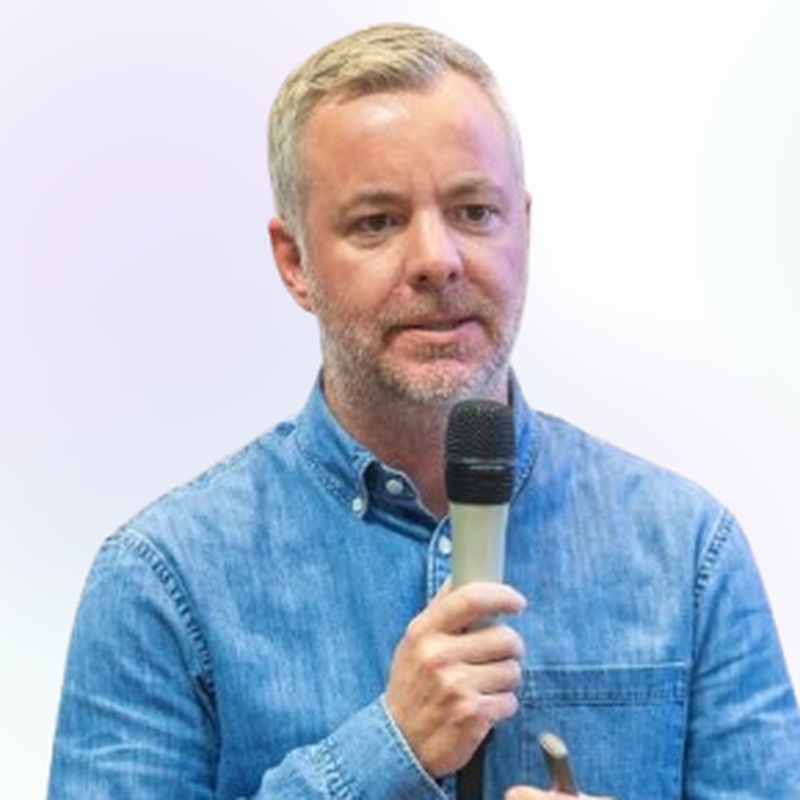
This article develops ideas from Stefan Erschwendner's keynote at “KI. Und jetzt?” in Linz, presented with Strategie Austria and Creative Region Linz & Upper Austria.